

To deepen industry-education integration and help students of the Product Design (Sino-Korean Cooperative Program) major build design thinking oriented toward enterprise needs, on June 25, SUES Design (in preparation) specially invited Gao Jingya, an expert in the digital and intelligent transformation of government and enterprise, into the Portfolio (Sino-Korean Cooperative Program) classroom, bringing sophomore students a special lecture focused on implementation and real-world practice. Through on-site portfolio reviews and guidance on design methodology, the session helped students understand the real needs of enterprises and reshape the value orientation of product design.
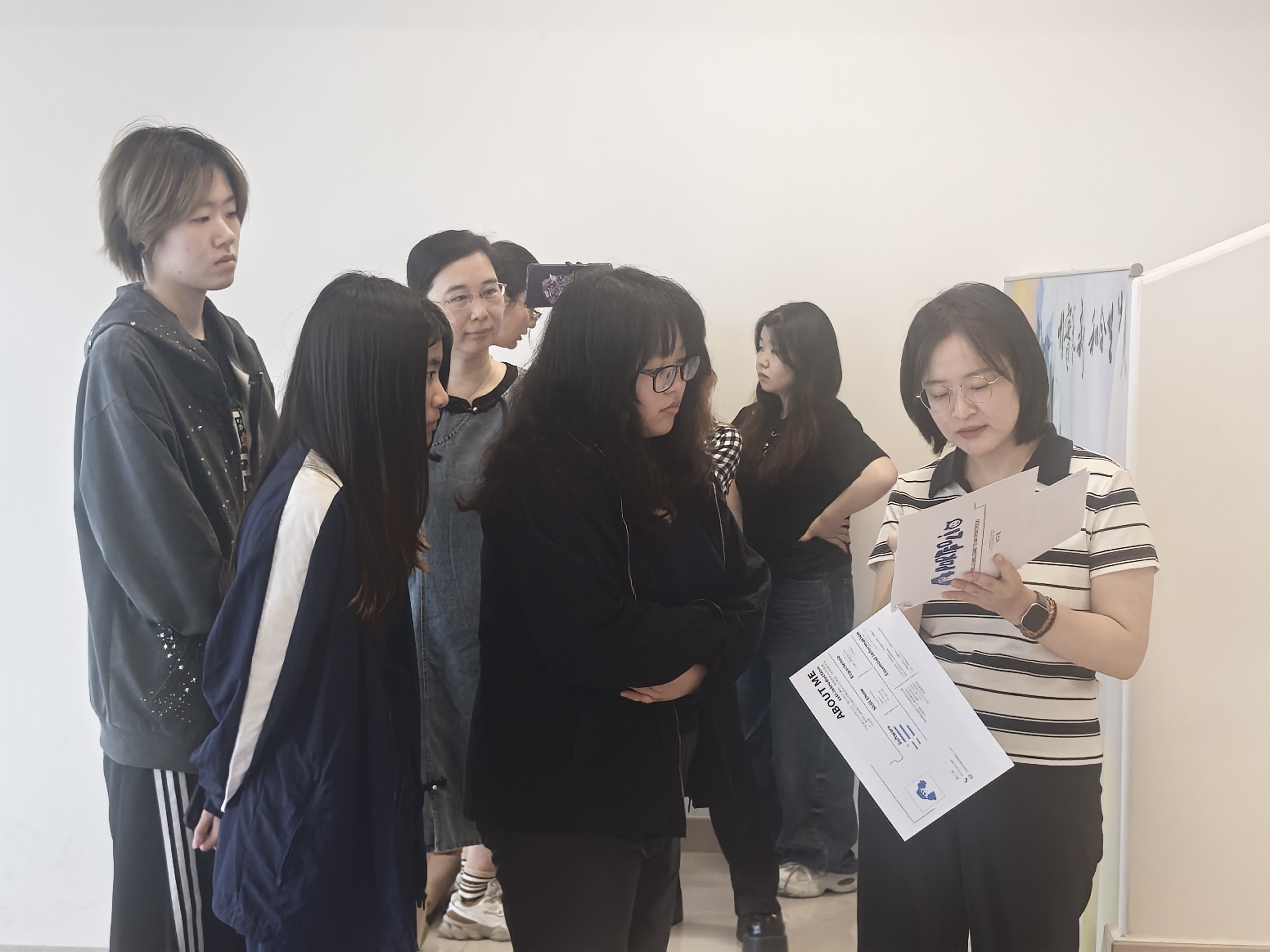
The keynote expert, Gao Jingya, addressed head-on the common dilemma in design students' portfolios today—an excessive pursuit of visual expressiveness and conceptual innovation while neglecting design's ability to respond to enterprises' business pain points. What enterprises need is not merely a person who draws pictures but a person who uses design to solve complex problems. Using the actual recruitment standards of leading technology companies as examples, the expert analyzed in depth the core logic that distinguishes B2B/G2G product design from consumer product design: information noise reduction, trust building, simplification of complex processes, and multi-role collaborative experiences all require designers to possess systematic thinking that starts from business scenarios.
The most popular segment among students was the on-site portfolio review. The expert had collected more than ten student course assignments and competition works in advance and dissected them one by one from the perspective of an enterprise recruiter. The review criteria covered not only visual presentation but focused on three key dimensions: whether the design logic is clear and traceable (the deduction chain from user research to solution implementation), whether the solution is verifiable (whether there is user testing data or scenario simulation validation), and whether the design expression reflects business understanding (whether it clearly explains how the design serves business goals or user efficiency).
The expert particularly emphasized that in an era of increasingly widespread AI tools, a designer's irreplaceability lies precisely in a deep understanding of business scenarios and empathy for user needs. AI can help you generate 100 draft solutions, but judging which one truly solves the user's pain point requires design thinking and business insight. She advised students to highlight the thinking process in their portfolios—including research findings, solution iterations, and reflections on failures—rather than merely polished final renderings.
Given that sophomore students are in a formative period for professional capabilities, the expert offered three suggestions for cultivating enterprise-oriented design capabilities: first, establish a problem-driven design habit, where every design project starts from a specific problem in a real scenario rather than from form or style; second, proactively embrace AI tools to empower the design process, using AI as an auxiliary tool for user research, solution generation, and usability testing to improve design efficiency and validation capabilities while always maintaining dominance over design decisions; third, cultivate narrative portfolio expression, connecting design projects with storytelling logic so that enterprise interviewers can understand within minutes why you did it, how you did it, and what you achieved.
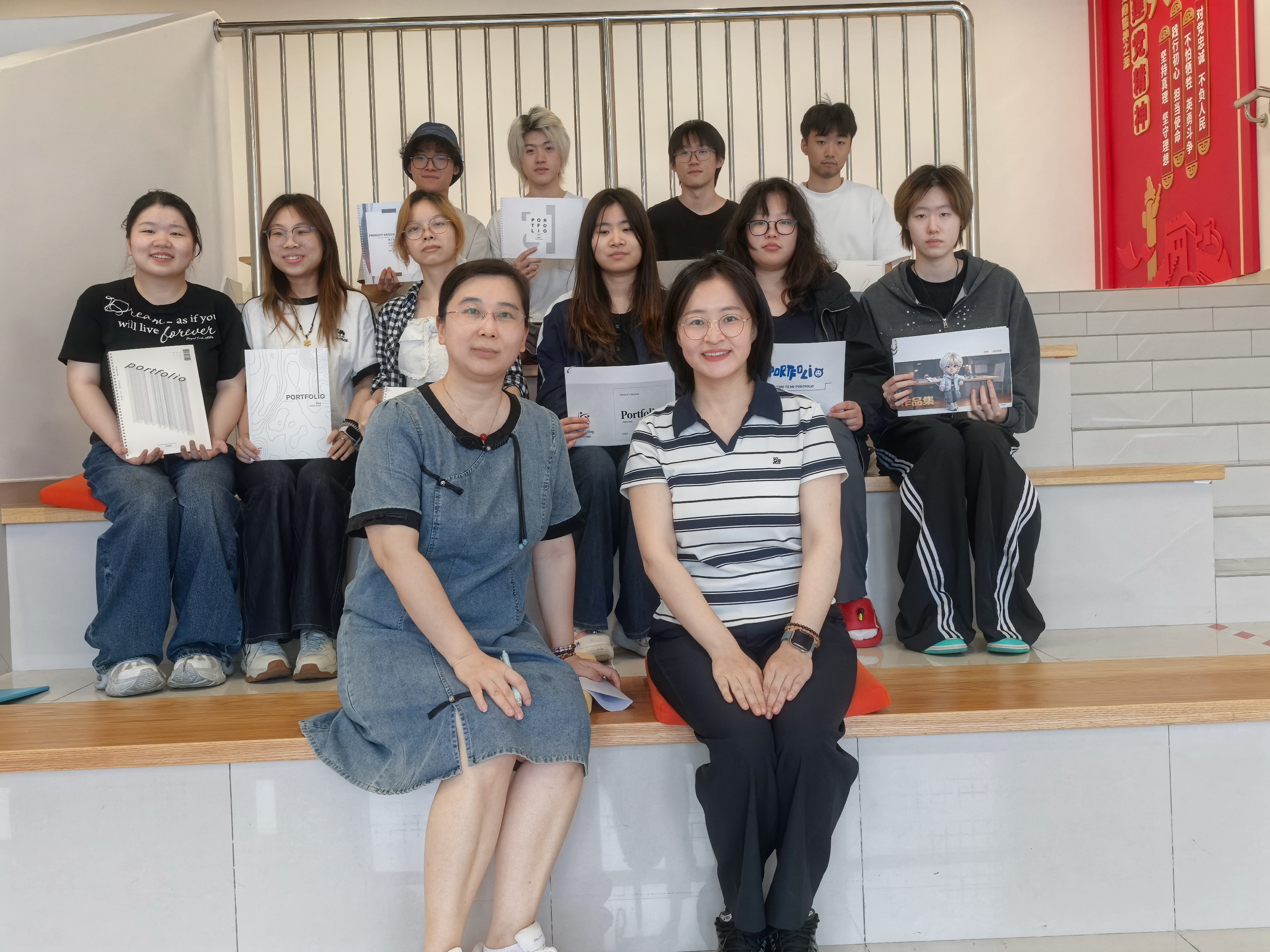
After the lecture, many students said they benefited greatly. Student Li, a sophomore in Product Design, said: I used to think a portfolio was just piling up nice-looking pictures. Today I finally understand that what enterprises want to see is the 'thinking behind the design.' When I go back, I'll reorganize my course assignments and add in the research process and solution iterations. Another student, Xu, said: The expert's mention of 'using AI to assist the design process' was very inspiring to me. It turns out AI isn't meant to replace us but to help us validate ideas faster.


