

At 11:15 a.m. on May 12, the International Institute of Creative Design conducted a safety training session on Electric Shock Emergency Response and Sudden Illness Emergency Response in Room 103 of the Teaching Building at the Changning Campus. The training covered sudden situations that may occur in laboratories and campus life, such as electric shock accidents, cardiac arrest, syncope, epilepsy, and airway obstruction, aiming to further enhance faculty and students' safety awareness and improve their self-rescue, mutual rescue, and on-site emergency response capabilities in the face of emergencies. The training was hosted by Fu Jia, Deputy Director of the Central Laboratory.
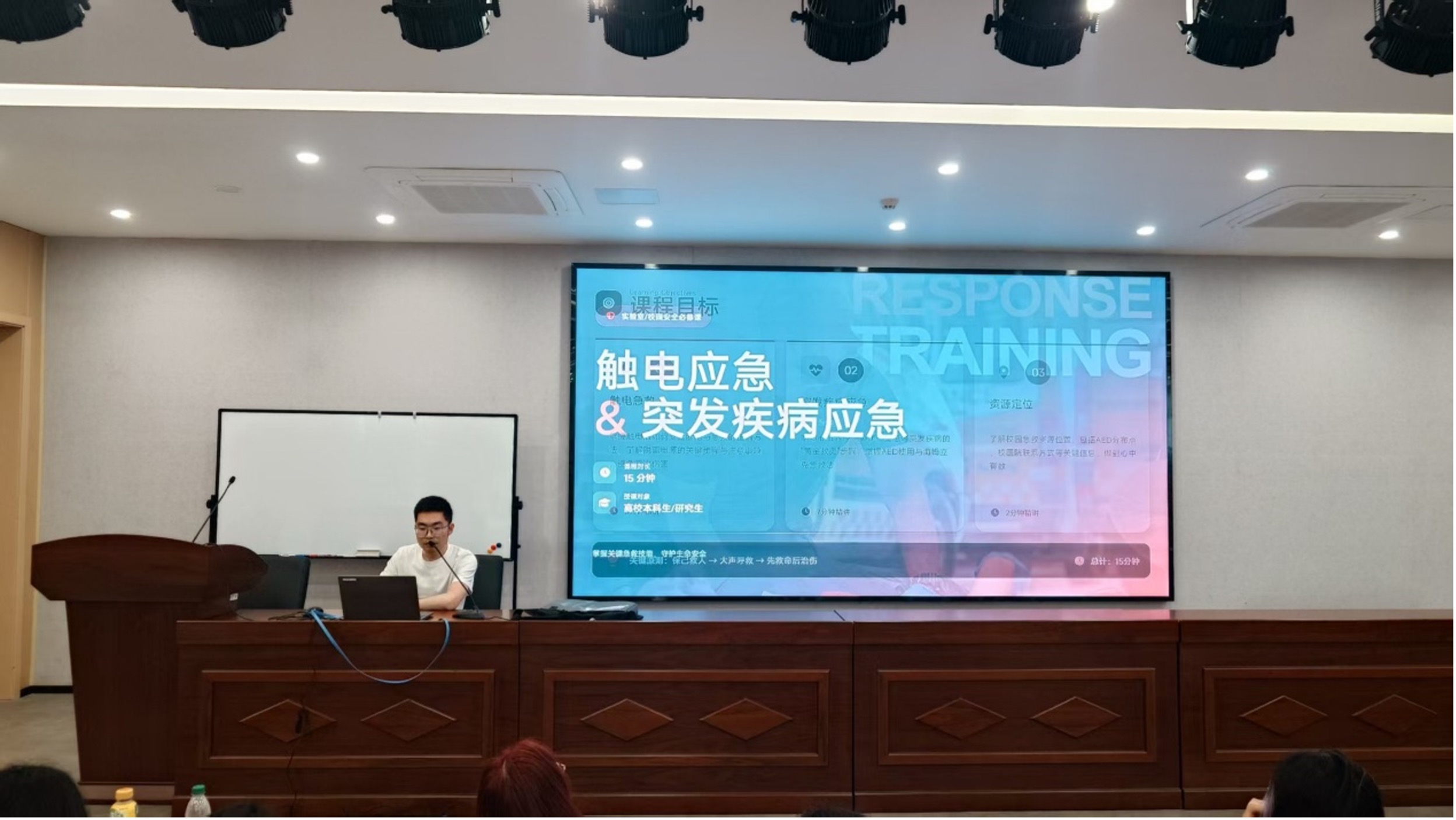
During the training, Fu Jia first explained the common scenarios and hazards of electric shock accidents. Combining campus common risks such as laboratory instrument leakage, unauthorized extension cords, operating electrical appliances with wet hands, and damaged chargers, he emphasized the basic principle of cut off the power first, then rescue the person. In response to the different situations of low-voltage and high-voltage electric shock, the training reminded faculty and students to respond on the premise of ensuring their own safety: for low-voltage electric shock, priority should be given to turning off the switch or unplugging the plug; when power cannot be cut off immediately, insulated objects such as dry wooden sticks, plastic chairs, and insulating gloves can be used to move the wire or the injured person; for high-voltage electric shock, a safe distance must be maintained, authorities must be called promptly, and professional personnel must be awaited, and blindly approaching or rescuing with bare hands is strictly prohibited.
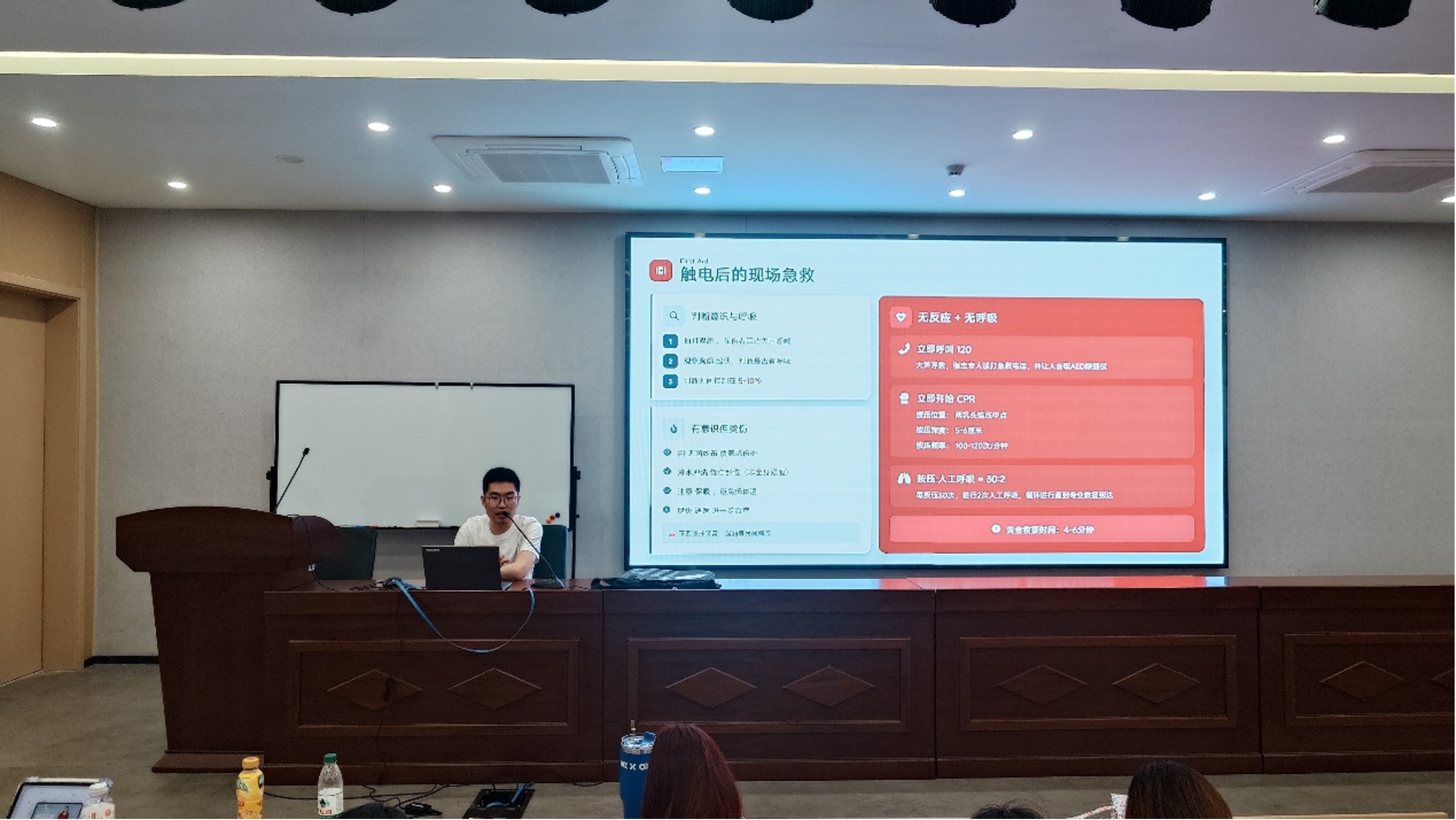
Subsequently, the training explained the on-site first aid process after electric shock. Starting from steps such as assessing consciousness and breathing and calling 120, the teacher introduced emergency handling methods for situations with no response and no breathing. For burns accompanying electric shock, the training reminded faculty and students to cover the wound with sterile gauze, rinse with cold water when necessary, and keep warm, avoiding unscientific folk remedies such as toothpaste or soy sauce.
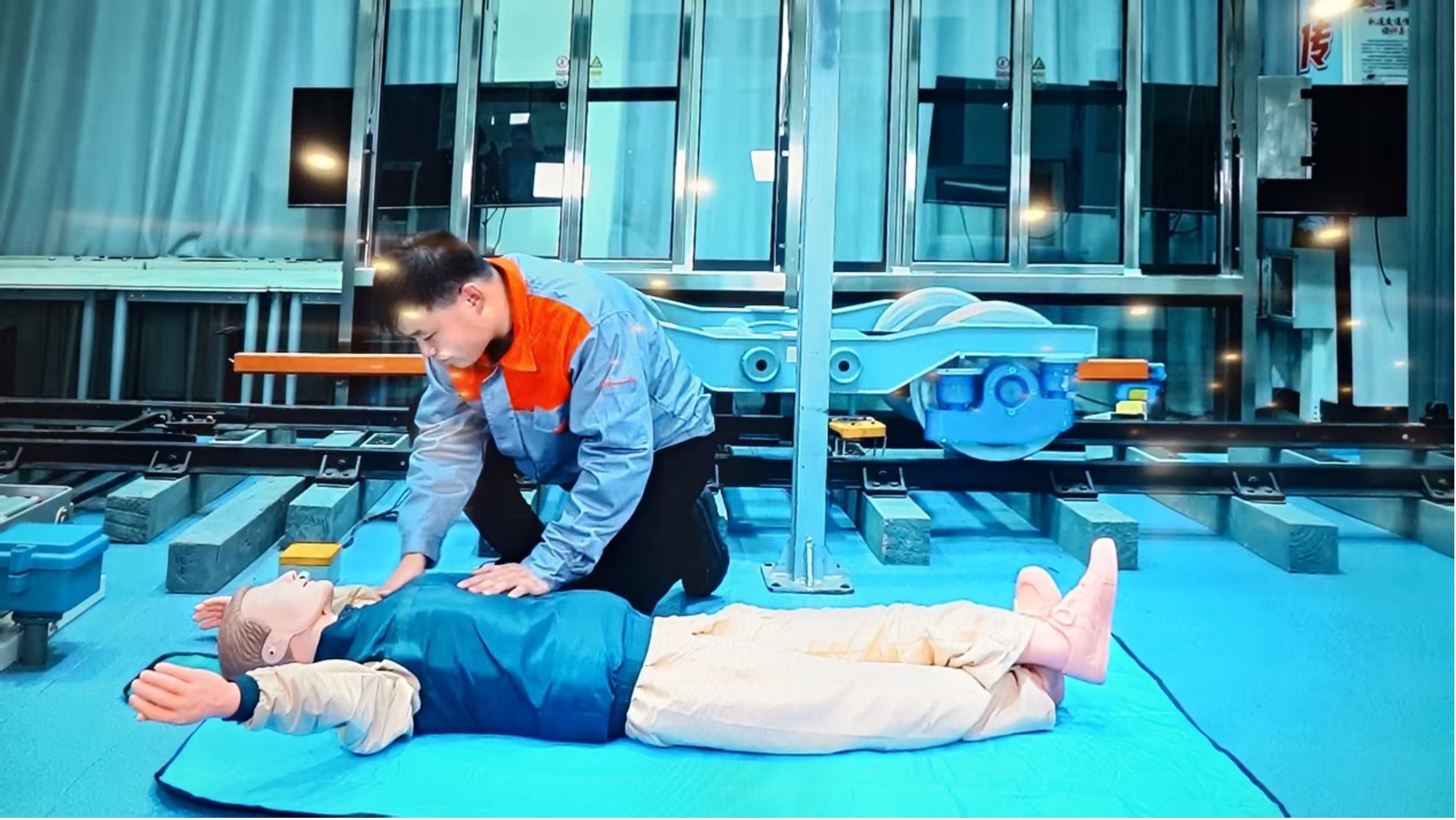
In the sudden illness emergency response section, the training provided categorized explanations of emergencies that may be encountered on campus, including syncope, cardiac arrest, epilepsy, and airway obstruction. For a person who suddenly faints, they should be placed flat, with the lower limbs appropriately elevated, the collar loosened, and ventilation maintained; do not force-feed water, administer medicine, or shake them vigorously. For cardiac arrest, dangerous signals such as unresponsive to calls, no breathing, or only gasping should be quickly identified within the golden rescue time, and help should be called immediately, 120 dialed, an AED retrieved, and high-quality CPR continuously performed.
Finally, the training reviewed campus first aid resources, reminding faculty and students to familiarize themselves with emergency phone numbers, the campus hospital's contact information, and AED locations so that they can quickly locate and promptly use them at critical moments. The training emphasized that the core principles of emergency response are protect yourself while saving others, call for help loudly, and save lives before treating injuries—that is, on the basis of ensuring on-site safety, clarify the division of labor, seek help promptly, and prioritize handling life-threatening emergencies.


