

To thoroughly implement the university's case-driven, project-led industry-education integration teaching model and solidly advance the effective implementation of the university's Three-Rotor development strategy, the junior-year International Comprehensive Project Design course at the International Institute of Creative Design, in the process of carrying out PBL teaching on Urban Context Digital-Intelligent Imaging Design, specially invited Teacher Lu Weifeng, a software engineer at Youyingli Technology (Shanghai) Co., Ltd., into the classroom to deliver a special lecture and industry sharing session themed AI Agents and AI Programming.
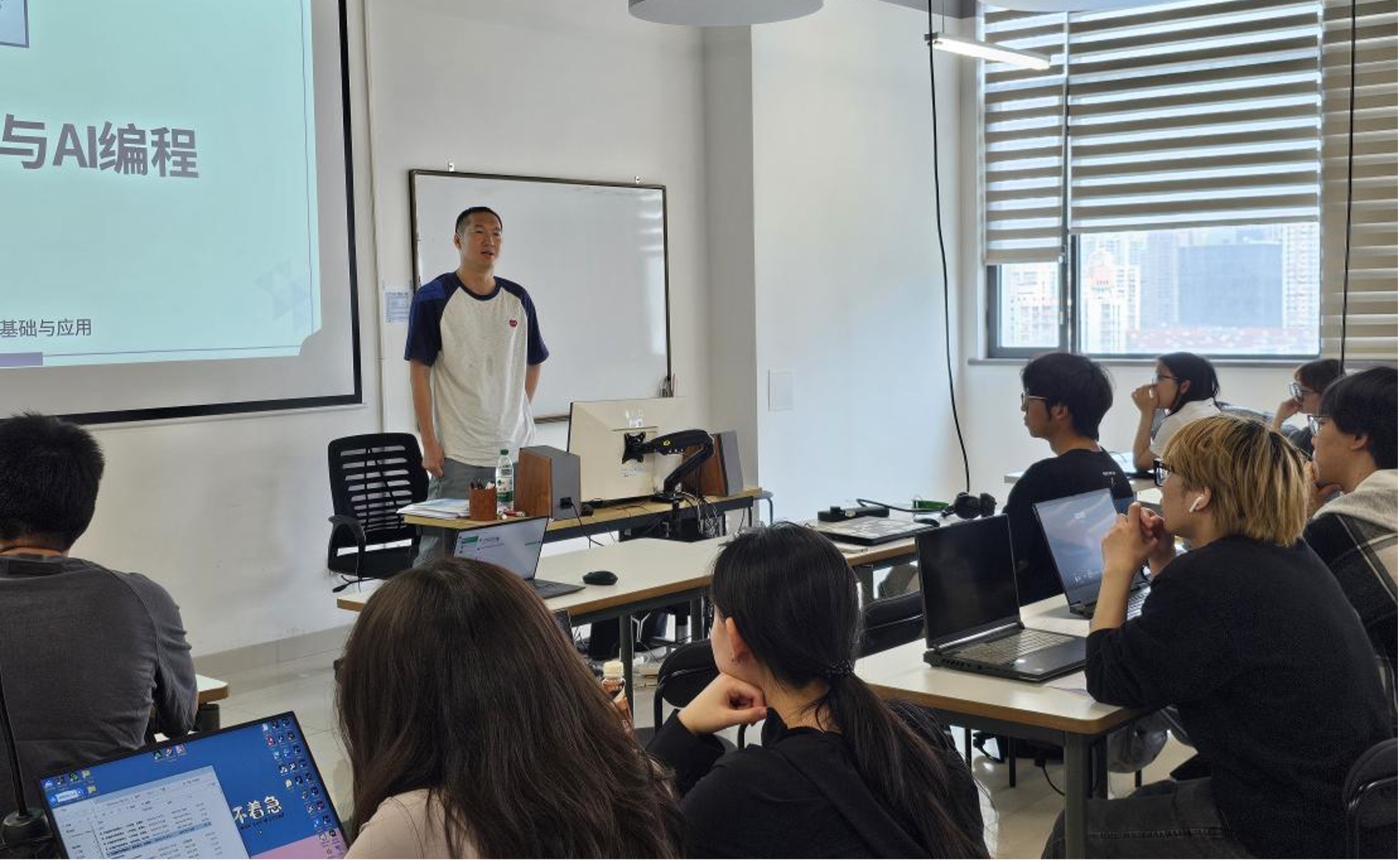
In class, Teacher Lu Weifeng closely followed industry frontiers and, using the VIBE CODE platform as a real case, deeply analyzed how the platform relies on AI agents and AI programming technology to rapidly build and implement VIBE CODE application instances, fully demonstrating the realization path of frontier AI technology from theoretical logic to project implementation.
During the lecture, Teacher Lu Weifeng, combining the currently hot social event of AI poisoning, led students in discussions around topics such as artificial intelligence ethical norms, technological boundaries, and creative responsibility, guiding students to establish a correct view of AI use and professional values. At the same time, he used the real entrepreneurial case of a 20-year-old university student who developed the VIBE CODING open-source project in just 10 days and received massive investment to inspire young students to dare to explore, be brave in practice, and innovate boldly, seizing the creative and entrepreneurial opportunities of the AI era.
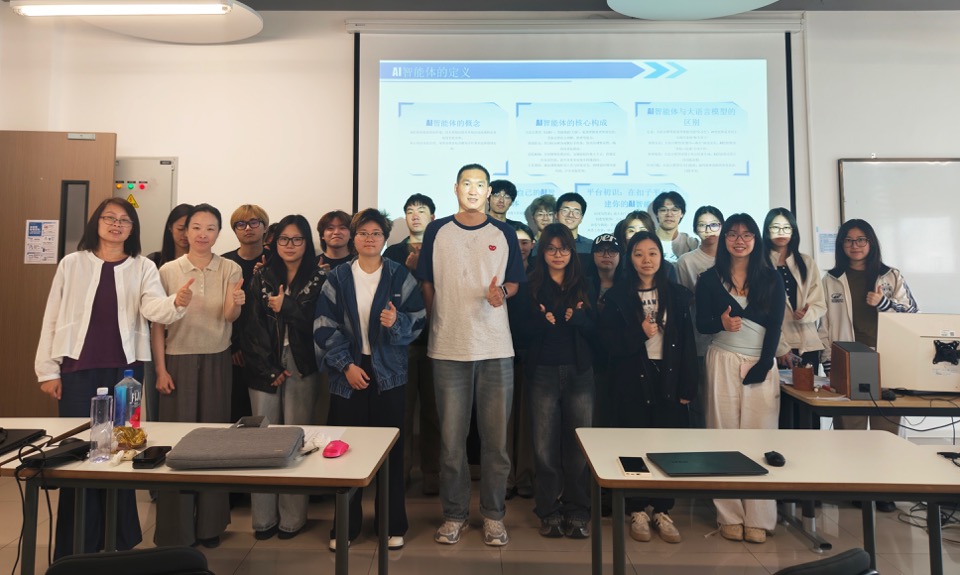
Combining industry development trends, Teacher Lu Weifeng offered valuable guidance and suggestions on the talent cultivation goals of media and entertainment design and the direction of future industry job competency transformation. He pointed out that human-machine collaboration will become the norm in the future: rather than simply relying on AI tools, humans will precisely propose design goals and formulate logical rules, allowing AI to efficiently complete generation and iteration work within established norms. He emphasized that creative leadership, rule control, and human-machine collaboration are the core competencies of future design and programming interdisciplinary talent.
This Industry Experts in the Classroom activity deeply integrated frontline enterprise real projects, frontier AI technology, industry ethical thinking, and talent cultivation suggestions into classroom teaching, broadening students' professional horizons and industry understanding and further strengthening the course's interdisciplinary, project-based, and practice-oriented teaching characteristics.


